
 Munch, Edvard
 (b. Dec. 12, 1863, Lцten,
Nor.--d. Jan. 23, 1944, Ekely, near Oslo)
(b. Dec. 12, 1863, Lцten,
Nor.--d. Jan. 23, 1944, Ekely, near Oslo)
Norwegian painter and printmaker
whose intense, evocative treatment of psychological and emotional themes was a
major influence on the development of German Expressionism in
the early 20th century. His painting The Cry (1893) is regarded as
an icon of existential anguish.
Note: The Edvard Munch article
in Britannica Online is made available to the general public for a
limited time, courtesy of Encyclopeadia Britannica, Inc.
Photographs by Mark Harden.
Thanks to Carol
Gerten-Jackson's help in this section.
Munch, Edvard (1863-1944). A gifted Norwegian painter and
printmaker, Edvard Munch not only was his country's greatest artist, but also
played a vital role in the development of German expressionism. His
work often included the symbolic portrayal of such themes as misery, sickness,
and death. The Cry, probably his most familiar painting, is typical
in its anguished expression of isolation and fear.
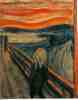 The Scream (or The Cry)
1893; 150 Kb; Casein/waxed crayon and
tempera on paper (cardboard), 35 7/8 x 29"; Nasjonalgalleriet (National
Gallery), Oslo
Munch was born on Dec. 12, 1863, in Loten, Norway. He grew up
in Christiania (now Oslo) and studied art under Christian Krohg, a Norwegian
naturalistic painter. Munch's parents, a brother, and a sister died while he was
still young, which probably explains the bleakness and pessimism of much of his
work. Paintings such as The Sick Child (1886), Vampire
(1893-94), and Ashes (1894) show his preoccupation with the darker
aspects of life.
Munch traveled to Paris in 1885, and his work began to show the influence of
French painters--first, the impressionists,
and then the postimpressionists--as well as art nouveau design. Like many young
artists Munch reacted against conventional behavior, and in 1892 he took part in
a controversial exhibit in Berlin. His circle of friends included several
writers, one of whom was the Norwegian playwright Henrik Ibsen. Munch designed
the sets for several of Ibsen's plays.
Between 1892 and 1908, Munch spent much of his time in Paris and Berlin,
where he became known for his prints--etchings, lithographs, and woodcuts. After
1910 Munch returned to Norway, where he lived and painted until his death. In
his later paintings Munch showed more interest in nature, and his work became
more colorful and less pessimistic. Munch died in Ekely, near Oslo, on Jan. 23,
1944. He left many of his works to the city of Oslo, which built a museum in his
honor.
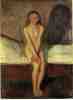 Puberty
1895; Oil on canvas, 150 x 110 cm (59 5/8 x 43 1/4
in); Nasjonalgalleriet (National Gallery), Oslo
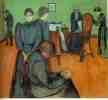 Death in the Sickroom
c. 1895; Oil on canvas,
59 x 66 in; National Gallery, Oslo
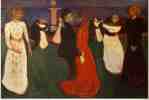 The Dance of Life
1899-1900 (120 Kb); Oil on canvas, 49 1/2 x
75 in; National Gallery, Oslo
 The Dead Mother
1899-1900 (130 Kb); Oil on canvas, 39 3/8 x
35 3/8 in; Kunsthalle, Bremen
© 22 Nov 1995, Nicolas Pioch
Thanks to the BMW Foundation, the
WebMuseum mirrors, partners and
contributors for their support.
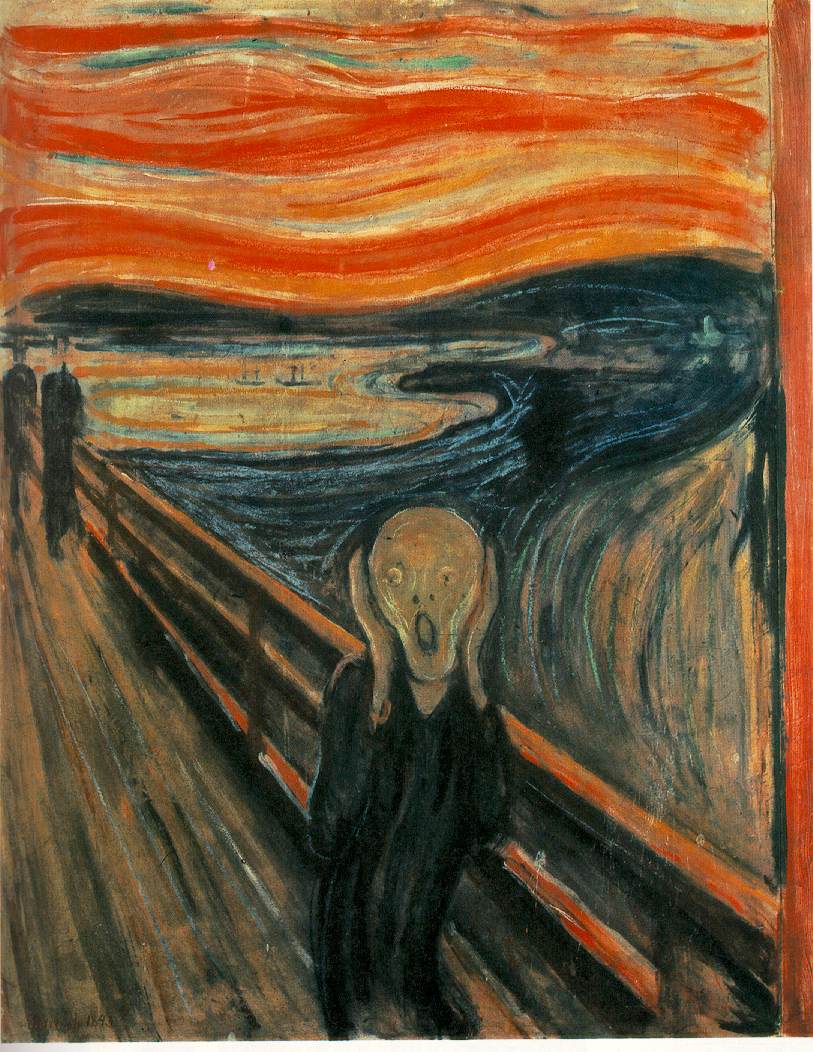 The Scream (or The Cry)
 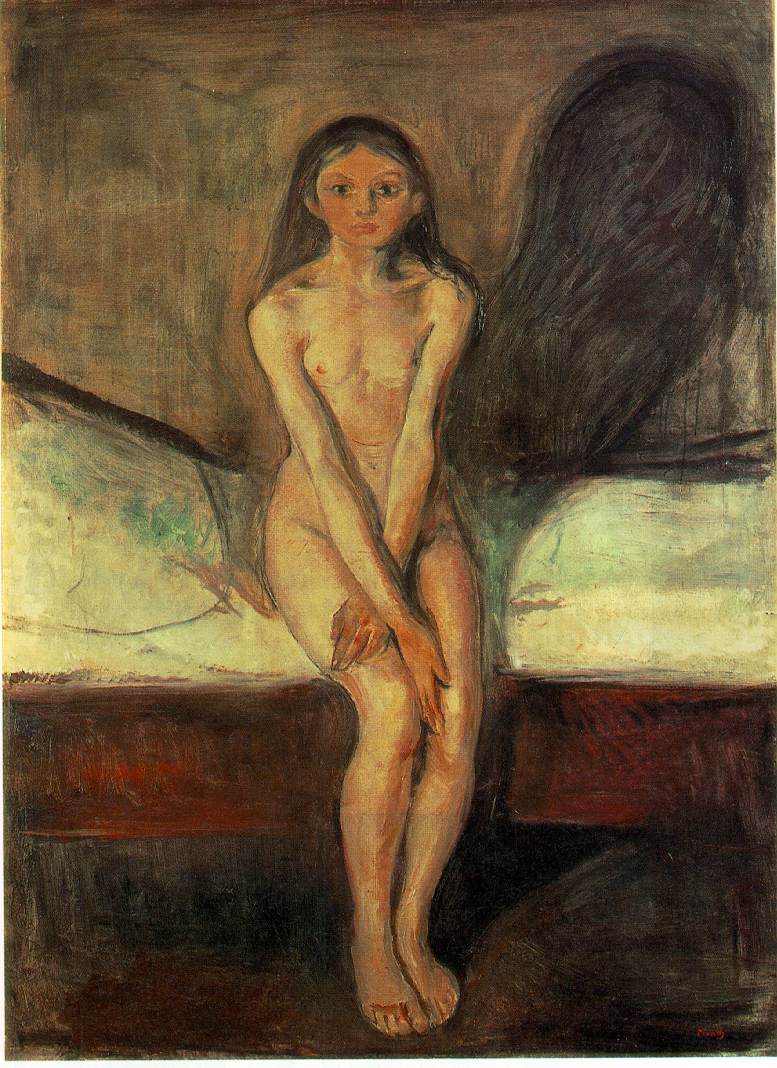 Puberty
 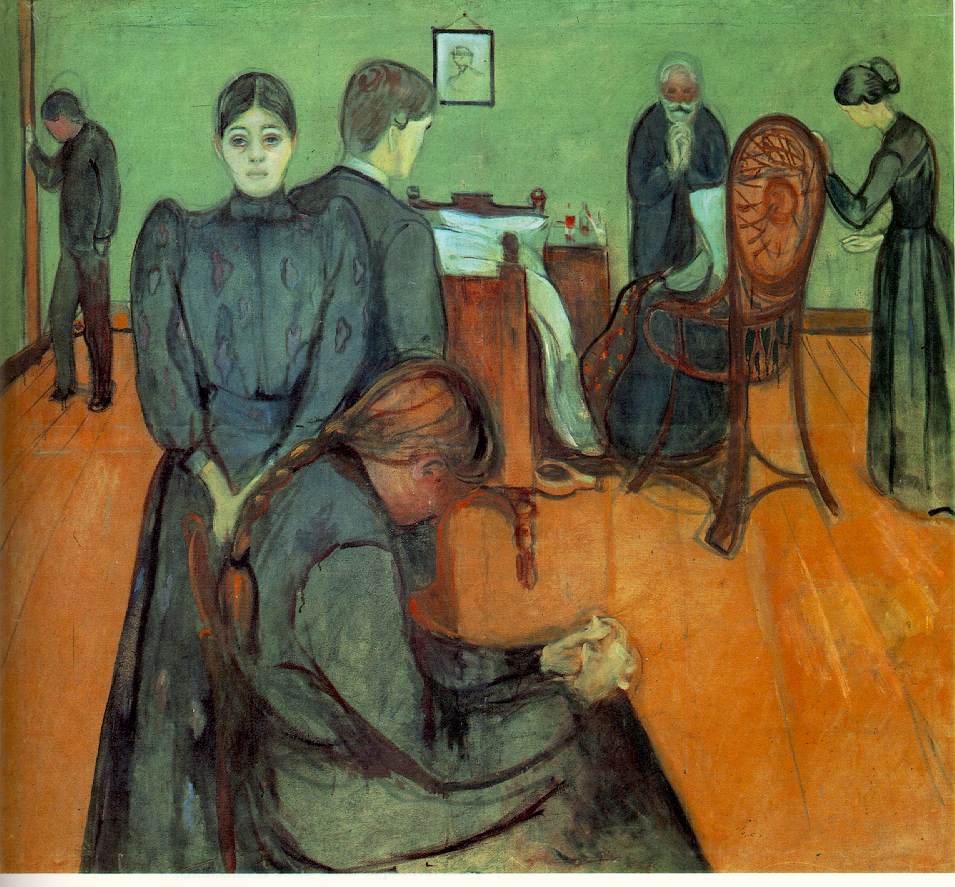 Death in the Sickroom
 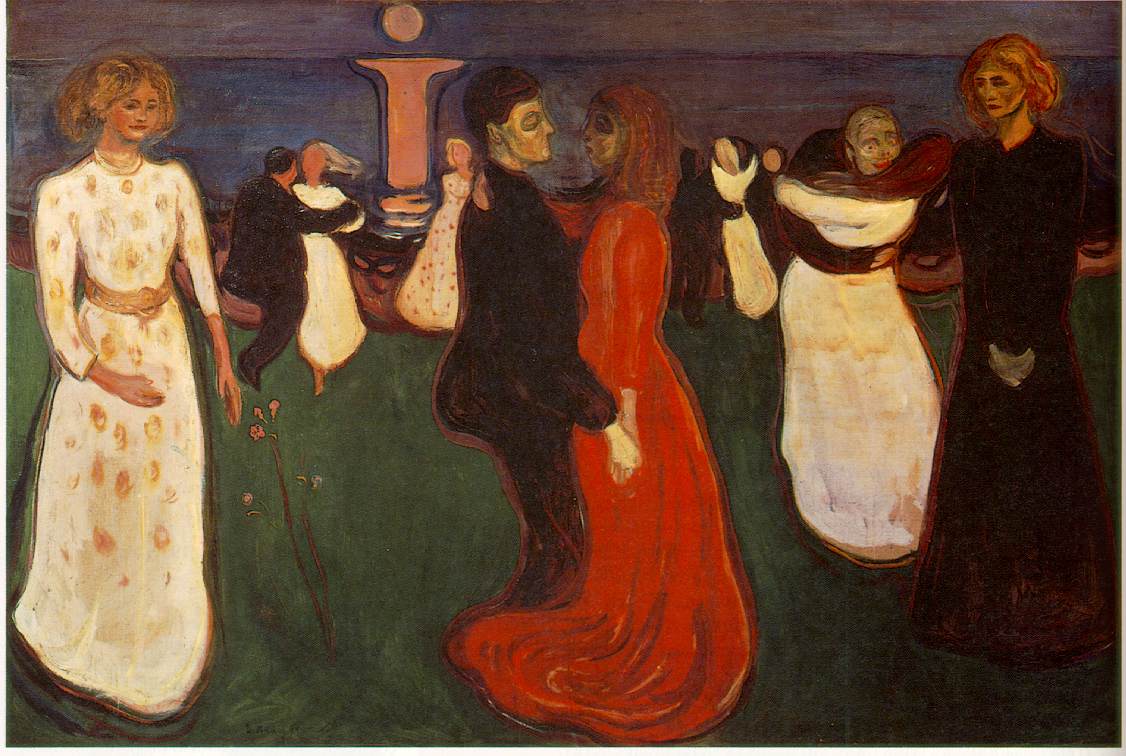 The Dance of Life
 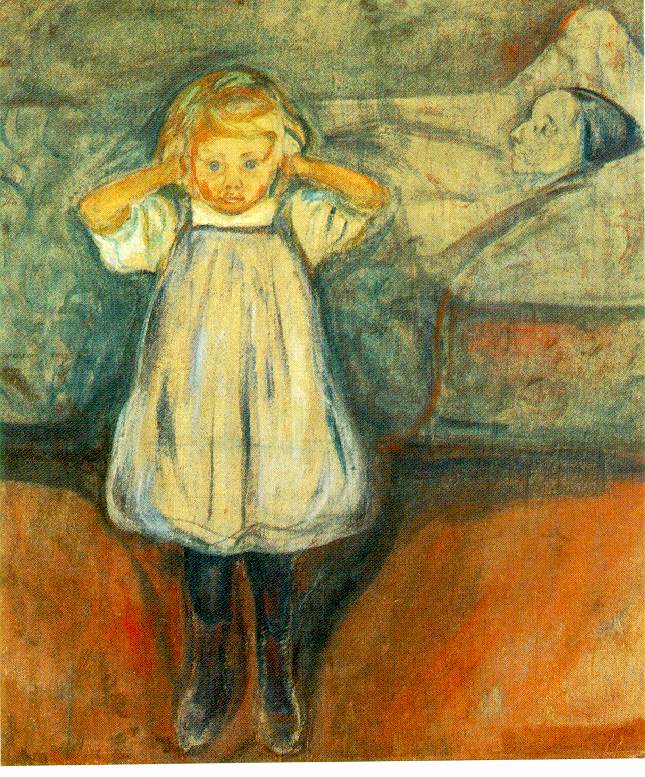 The Dead Mother